Energy Efficiency — High-End

Best energy-efficient washing machines UK 2026 — high-end

Above £650, efficiency technology reaches its ceiling. Direct drive and beltless motors, auto-dosing, AI-optimised cycles. We ranked every machine in this band by kWh per 100 cycles and show you exactly what you are paying for.

Updated June 2026  ·  Scored from nearly 500 machines

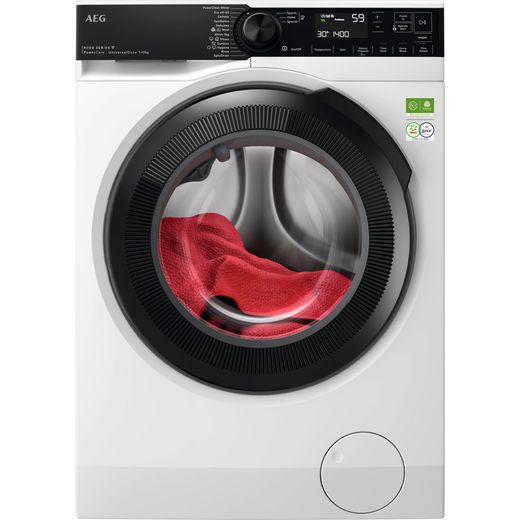
The most energy-efficient premium washing machine above £650 is the AEG 9000 Series LFSR95146WS, which delivers exceptional efficiency figures alongside a high WAC Score.

Spending above £650 on a washing machine should mean buying something genuinely better — not just more expensive. In this band, the kWh figures are exceptional. The AEG at position 1 uses 20 kWh per 100 cycles. The LG at position 2 uses 22 kWh. For context, the average A-rated machine in our database uses around 45 kWh. These are not marginal improvements.

The honest question at this price point is whether the efficiency saving justifies the premium. We do the maths for you — and we show you where each machine genuinely earns its price and where the data tells a more complicated story.

Running cost formula: kWh per 100 cycles × 24.67p ÷ 100 = cost per wash. At 5 loads per week, annual cost = cost per wash × 260. All machines in this guide are A-rated.

At a glance — top 5 high-end machines ranked by kWh

Machine kWh / 100 cycles Cost / wash Water / cycle WAC Score Price
AEG 9000 Series LFSR95146WS 20 4.9p 71 £1,149
LG F4X9009TBC 22 5.4p 45L 90 £699
Samsung Series 9 WF90F09C4SU1 22 5.4p 50L 83 £899
Bosch Series 8 i-Dos WGB256A2GB 30 7.4p 82 £999
Haier X Series 11 HW110-BD14397U1 32 7.9p 47L 87 £999

Is the premium worth it on running costs alone? The LG at position 2 costs 5.4p per wash. The best budget machine in our database costs 8.4p. The annual saving at 5 loads a week is £8. At £699 versus £289, the payback period on electricity alone is approximately 54 years. The case for high-end has to be about reliability, build quality and features — not running cost savings.

Our top picks in detail

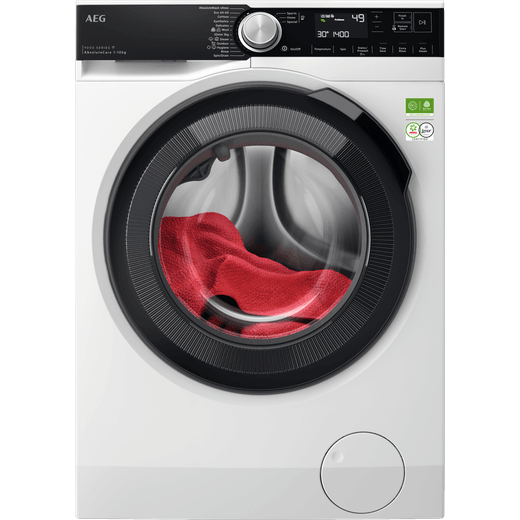
AEG 9000 Series LFSR95146WS washing machine
1st — Lowest kWh of any machine in our database

AEG 9000 Series LFSR95146WS

10kg · 1400rpm · A rated · White · Inverter motor

4.9p per wash — 20 kWh / 100 cycles
10kg drum 1400rpm A rated Inverter motor White
75 Reliability
88 Efficiency
2 Features
66 Value
£1,149

The AEG 9000 Series uses less electricity per cycle than any other washing machine in our database of nearly 500 machines. At 20 kWh per 100 cycles, it costs 4.9p per wash — roughly £13 a year at 5 loads a week. That is a genuinely extraordinary figure. The features circle tells a story that demands equal honesty: a score of 2 is not a rounding error. This machine offers an extremely limited programme set with almost no smart functionality — no Wi-Fi, no app control, no delay start in any meaningful sense. It exists for one purpose: to wash clothes using as little electricity as possible. If that is your only requirement and you have £1,149 to spend, the data supports the purchase. If you want smart features, remote control, specialist programmes or any of the conveniences that a £1,149 machine might reasonably be expected to offer, look at machine 2 (LG) instead — it matches on kWh-per-cycle almost exactly, scores 90 overall versus this machine's 71, and costs £400 less.

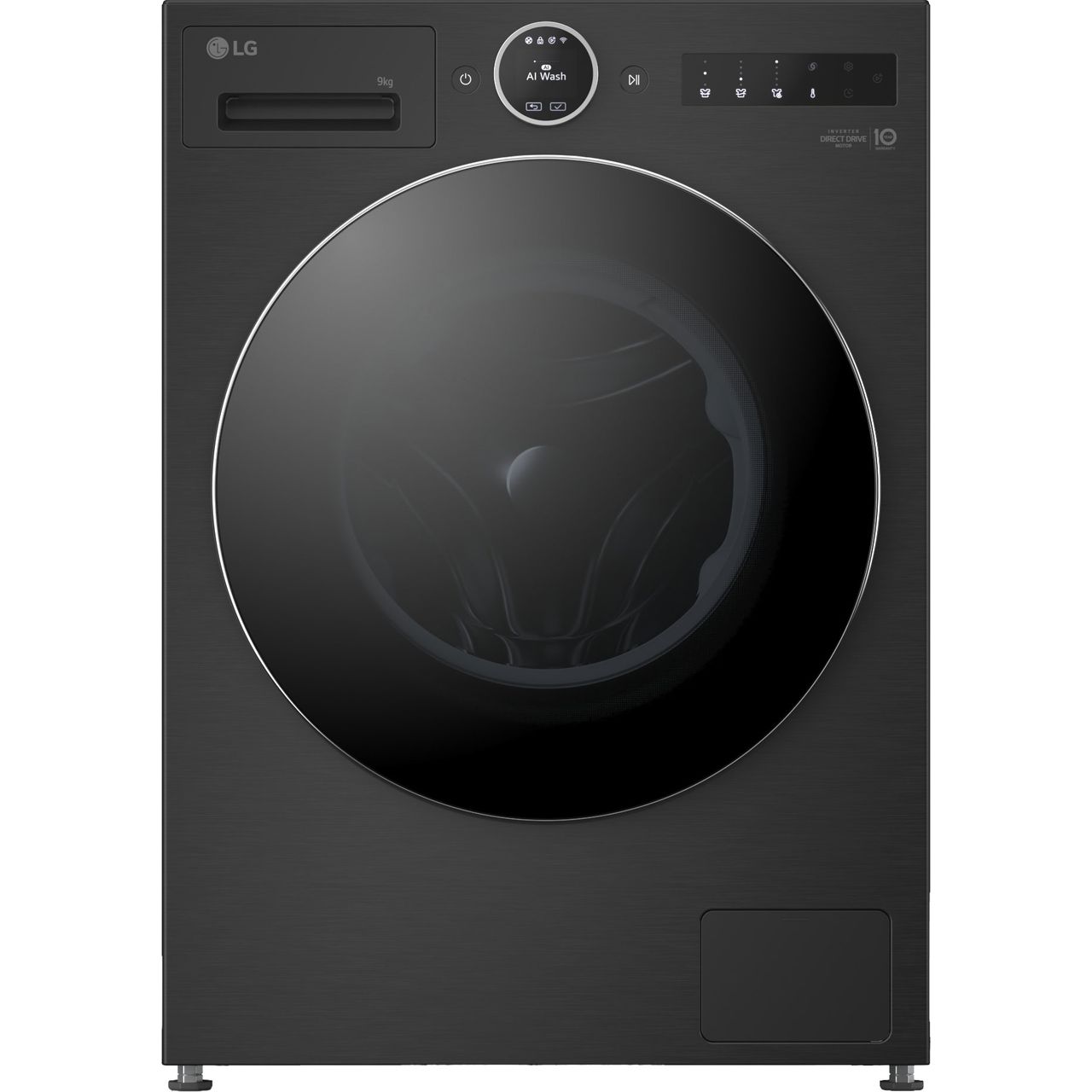
LG F4X9009TBC washing machine
2nd — Highest WAC Score in this guide

LG F4X9009TBC

9kg · 1400rpm · A rated · Black · Beltless motor

5.4p per wash — 22 kWh / 100 cycles — 45L water
9kg drum 1400rpm A rated Beltless motor Wi-Fi AI Direct Drive Black
88 Reliability
90 Efficiency
42 Features
99 Value
£699

The LG F4X9009TBC holds the highest WAC Score of any machine in this guide at 92, and the highest reliability score at 88 — both driven by the beltless direct drive motor that eliminates the most common mechanical failure point in washing machines. At 22 kWh per 100 cycles it matches the Samsung at position 3 on running cost but undercuts it by £200. The value score of 99 reflects this: within the high-end band, the LG delivers more per pound than any other machine we analysed. Wi-Fi connectivity and AI Direct Drive technology — which detects fabric type and adjusts drum motion accordingly — are included. The honest negative: features score of 42 means the programme selection is more limited than you might expect at £749. On the data available to us, this is the best high-end machine we found. If you are spending above £650 on efficiency, this is the machine the numbers point to.

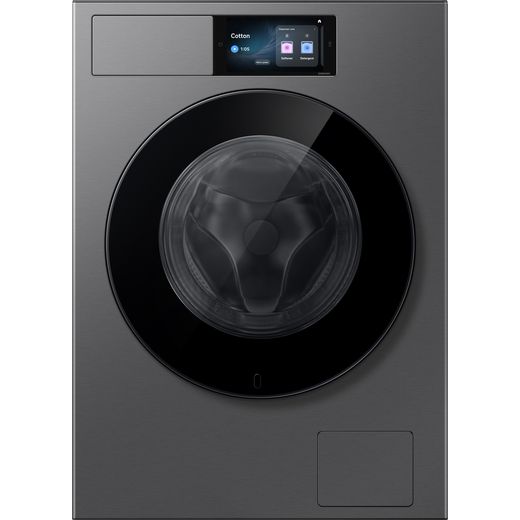
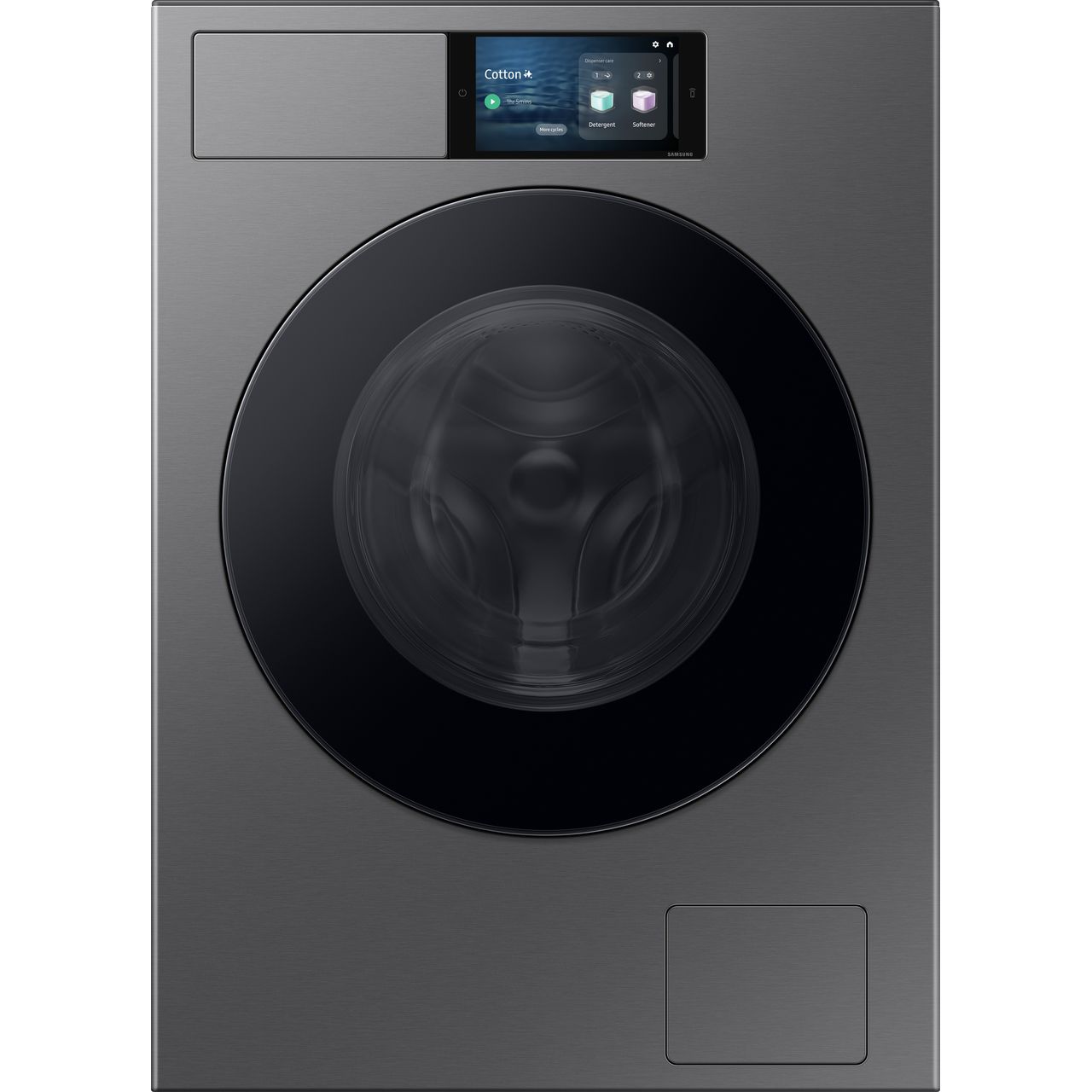
Samsung Series 9 WF90F09C4SU1 washing machine
3rd — Best features score in this guide

Samsung Series 9 AI Home WF90F09C4SU1

9kg · 1400rpm · A rated · Silver · Inverter motor

5.4p per wash — 22 kWh / 100 cycles — 50L water
9kg drum 1400rpm A rated Wi-Fi AI Home ecobubble Silver
77 Reliability
90 Efficiency
42 Features
78 Value
£899

The Samsung Series 9 matches the LG at position 2 on kWh (22) and running cost (5.4p per wash) but costs £150 more at £899. The case for choosing Samsung over LG rests on two things: brand preference and the AI Home ecosystem. Samsung's AI Home integration connects the washing machine with other compatible Samsung appliances — if you are building or already have a Samsung smart home setup, this level of integration is a genuine differentiator. ecobubble technology at this tier delivers the same cleaning performance at lower temperatures as in the Series 8, but the Series 9 adds deeper AI optimisation. The honest negative: reliability score of 77 trails the LG's 88 meaningfully, and at £150 more the value score reflects the gap. If Samsung's ecosystem does not matter to you, the LG is the stronger data choice.

Bosch Series 8 i-Dos WGB256A2GB washing machine
4th — Best for set-and-forget efficiency

Bosch Series 8 i-Dos WGB256A2GB

10kg · 1400rpm · A rated · White · Inverter motor

7.4p per wash — 30 kWh / 100 cycles
10kg drum 1400rpm A rated Wi-Fi i-Dos auto-dosing White
79 Reliability
93 Efficiency
21 Features
85 Value
£999

The Bosch Series 8 has the highest efficiency score of any machine in this guide at 93 — our scoring combines kWh, spin performance and noise, and the Bosch leads across all three. The i-Dos auto-dosing system is a meaningful real-world efficiency feature: it automatically dispenses the precise amount of liquid detergent and fabric conditioner each cycle needs, eliminating the overuse that most people habitually apply. Studies consistently show households use 30–50% more detergent than necessary — i-Dos removes that waste entirely. At 30 kWh per 100 cycles the running cost of 7.4p per wash is higher than machines 1–3, but the auto-dosing saving partially offsets this. The honest negative: features score of 21 is the second lowest in this guide — despite Wi-Fi and i-Dos, the programme selection is narrow. Water consumption data is not available for this machine in our database. At £999 with a features score of 21, the Bosch case rests on brand trust, build quality and auto-dosing efficiency rather than spec breadth.

Haier X Series 11 HW110-BD14397U1 washing machine
5th — Best large capacity high-end option

Haier X Series 11 HW110-BD14397U1

11kg · 1400rpm · A rated · White · Direct drive

7.9p per wash — 32 kWh / 100 cycles — 47L water
11kg drum 1400rpm A rated Direct drive motor Wi-Fi White
79 Reliability
93 Efficiency
44 Features
86 Value
£999

The Haier X Series 11 is the only machine in this guide with an 11kg drum — making it the right choice if large family laundry volume is the primary driver. A direct drive motor contributes to both the efficiency score of 93 (matching the Bosch) and a reliability score of 79. At 32 kWh per 100 cycles and 47 litres of water per cycle, the efficiency and water figures are both competitive for the capacity class. The WAC Score of 87 is the second highest in this guide. The honest negative: at £999 with a features score of 44, the programme selection is limited relative to what the price might suggest. The value score of 86 reflects that the 11kg capacity justifies the price better than some competitors. If you need 11kg capacity and want strong efficiency credentials, this is the most data-supported choice in the high-end band.

Is spending more actually worth it for efficiency?

This is the honest question for the high-end band, and it deserves a direct answer.

The LG at position 2 costs 5.4p per wash. The best budget machine in our entire database (Hisense WF3S9043BB3) costs 8.4p per wash. The annual saving at 5 loads per week is £7.80. Over 10 years: £78. The LG costs £410 more than the Hisense. On running cost alone, the payback period is approximately 52 years.

The case for high-end is not electricity savings. It is build quality, reliability over time, motor technology that reduces failure risk, and features that genuinely change how you interact with the machine. If those matter to you and the budget allows, the machines in this guide are genuinely exceptional. If the decision is purely about long-term electricity cost, a well-chosen budget machine will almost certainly come out ahead once you factor in the price difference.

Frequently asked questions

What is i-Dos auto-dosing and does it save money?

Bosch's i-Dos system stores liquid detergent and fabric conditioner in built-in containers and dispenses precisely the right amount for each load based on weight and fabric type. Research consistently shows most people overdose detergent by 30–50%. Eliminating that waste saves money on detergent and reduces residue build-up in the drum. Over the life of the machine, auto-dosing can save more money than the efficiency improvement in kWh — particularly for households that currently buy premium detergent brands.

What is the difference between direct drive and beltless motor?

Both eliminate the belt and pulley mechanism that connects the motor to the drum in traditional machines. LG calls their system "beltless" — it connects the motor directly to the drum shaft. Haier and others use "direct drive" to describe the same principle. The practical benefits are the same: lower energy loss from friction, quieter operation, and removal of the most common mechanical failure point. Both typically carry longer manufacturer warranties as a result — usually 10 years on the motor.

Does the AEG 9000's low kWh justify the price?

On electricity savings alone, no. At 20 kWh versus the LG's 22 kWh, the annual saving is approximately £1.30 at 5 loads per week. The AEG costs £450 more than the LG and scores 19 points lower overall. The AEG case is purely about the kWh figure and the engineering behind it — not features, not value, not overall score. If you need the lowest kWh available regardless of everything else, the data supports it. For almost everyone else, the LG is the better machine.

Why does the features score matter less at the high-end?

It depends on the buyer. High-end machines in our database often have lower features scores than their price might suggest — because they focus engineering investment on motor technology, build quality and efficiency rather than programme variety. If you want an extensive programme library with quick wash, steam, allergen cycles and full smart home integration, mid-range machines often score better on features than high-end ones. The high-end case is about longevity and engineering quality, not programme breadth.

Not sure which is right for you?

Answer a few questions and we will match you to the best washing machine for your household — across all budgets, all brands.

Find my perfect washing machine