Best energy-efficient washing machines UK 2026 — budget
The most energy-efficient washing machines under £400 — ranked by kWh per 100 cycles, not by energy label alone. All A-rated. Running costs calculated at the July 2026 Ofgem price cap of 26.11p per kWh.
The most energy-efficient freestanding washing machine under £400, based on 500+ UK washing machines and 430,000+ verified reviews, is the Hoover HGD 49B10C-80 at £239 — 30 kWh per 100 cycles, about 7.8p a wash, the lowest running cost in the band. But this guide’s honest headline is that it barely matters: for a little more money and near-identical running cost, the LG F2X50S9TWB (WAC 88 on the WAC Score) gives you far more all-round machine in 2026.
There is a particular trap waiting in any list ranked purely by energy use, and this guide walks you straight up to it before pulling you back. The machine at the very top — the one with the lowest number in the kWh column — is almost never the machine you should buy. Efficiency guides sort by a single figure, and a single figure can be won by a hair: shave one kilowatt-hour off the annual total and you leap to first place, even if you are dearer to buy, thinner on features and worse value than everything beneath you. The washing machine that runs cheapest is not automatically the washing machine that costs least to own.
So read this list the way you would read a spec sheet with a sceptical friend. The top of the table tells you which machine sips the least electricity; the WAC Score column tells you which machine is actually worth your money once running cost, reliability, features and price are weighed together. Where those two disagree — and here they disagree sharply — the WAC Score is the one to trust. The genuinely efficient and sensible machines sit a rung or two down, and we point straight at them.
Every machine here is A-rated, freestanding and under £400, with kWh and cost-per-wash calculated at the July 2026 Ofgem rate of 26.11p per kWh across roughly 220 washes a year. We cap each brand at two machines so one name cannot fill the list.
Running cost formula: kWh per 100 cycles × 26.11p ÷ 100 = cost per wash. At 5 loads per week, multiply by 260 for the annual figure. All kWh figures are measured on the eco programme.
At a glance — budget machines ranked by energy use
| # | Machine | Drum (kg) | Energy (kWh/100) | Cost per wash | WAC Score | From |
|---|---|---|---|---|---|---|
| 1 | Hoover HGD 49B10C-80 | 9 | 30 | 7.8p | 90 | £239 |
| 2 | Haier HW100BP14357AEUK | 10 | 31 | 8.1p | 83 | £369 |
| 3 | Hoover HBP 410BL10UC-80 | 10 | 31 | 8.1p | 78 | £379 |
| 4 | LG F2X50S9TWB | 9 | 32 | 8.4p | 88 | £369 |
| 5 | Haier HW90BP14357AETUK | 9 | 32 | 8.4p | 82 | £349 |
Our top picks in detail
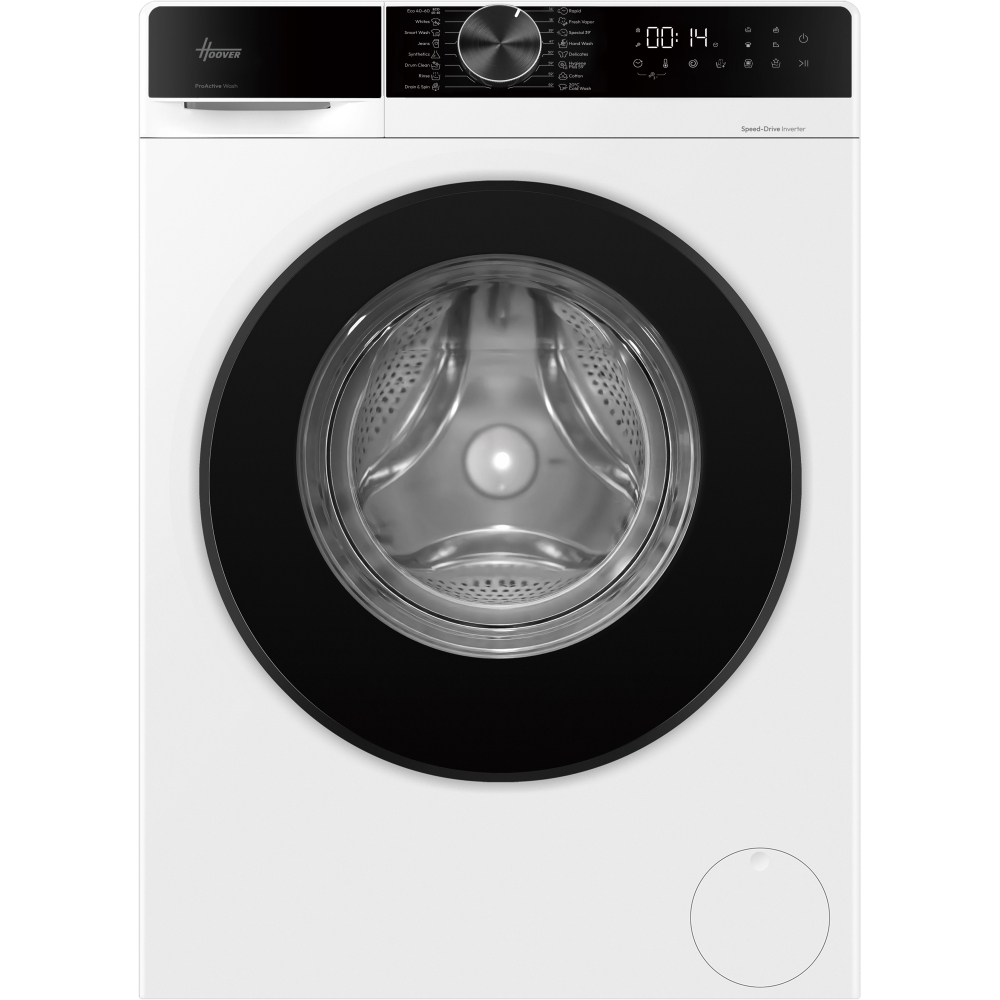
Hoover HGD 49B10C-80
9kg · 1400rpm · A rated · White
The lowest running cost under £400 and the cheapest machine on the page: 30 kWh per 100 cycles, about 7.8p a wash, for £239. Reliability of 71 is the trade.
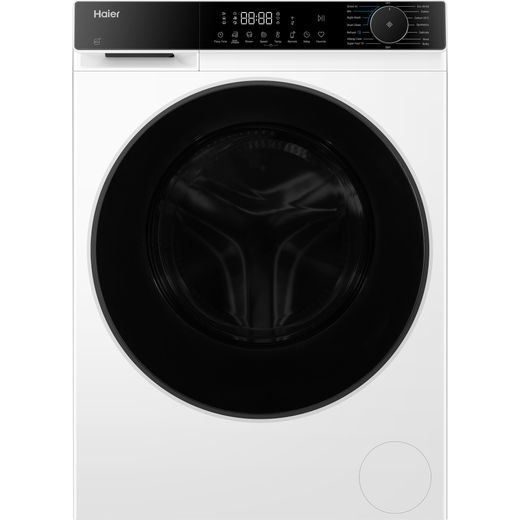
Haier X5 Plus HW100BP14357AEUK
10kg · 1400rpm · A rated · White
A 10kg drum at 31 kWh, about 8.1p a wash — the biggest machine here and only a penny a wash more than the Hoover above it.
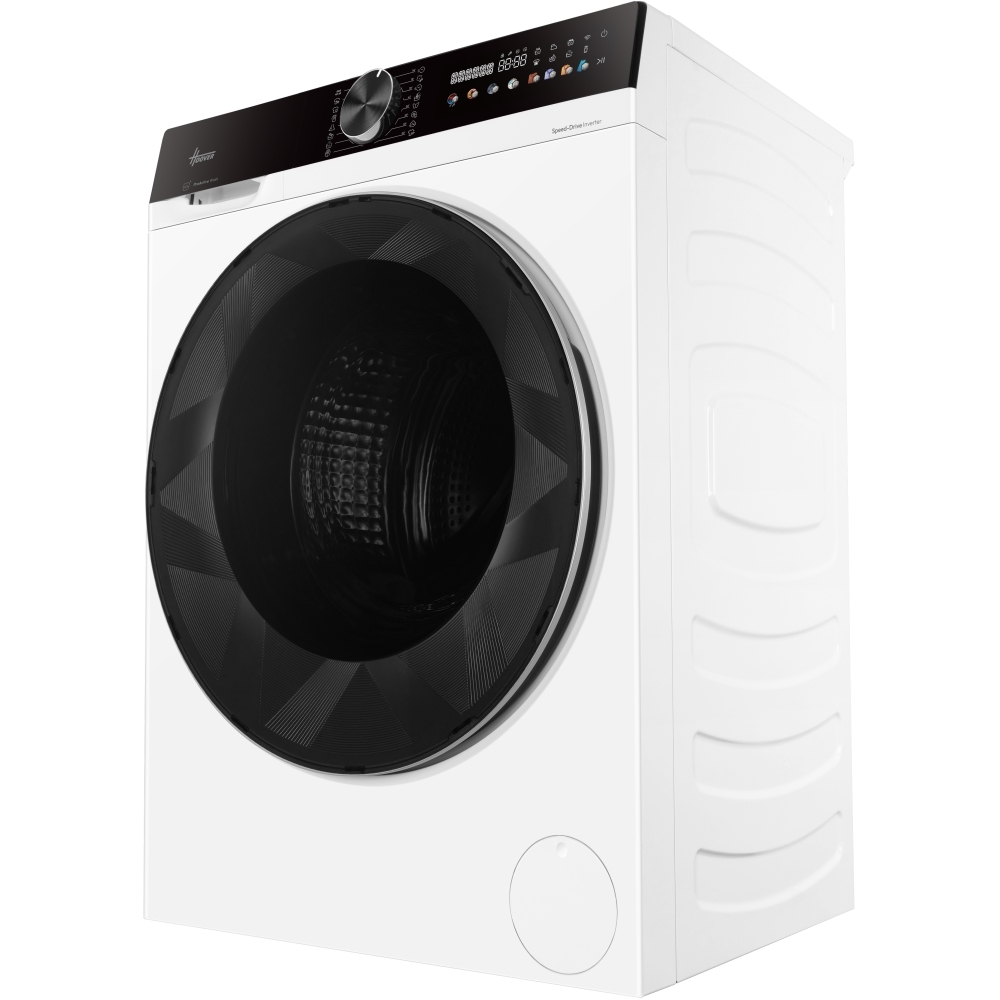
Hoover HBP 410BL10UC-80
10kg · 1400rpm · A rated · White
The same 31 kWh in a 10kg Hoover. It costs £10 more than the Haier and scores five points lower overall, so take this one only if you prefer the brand.
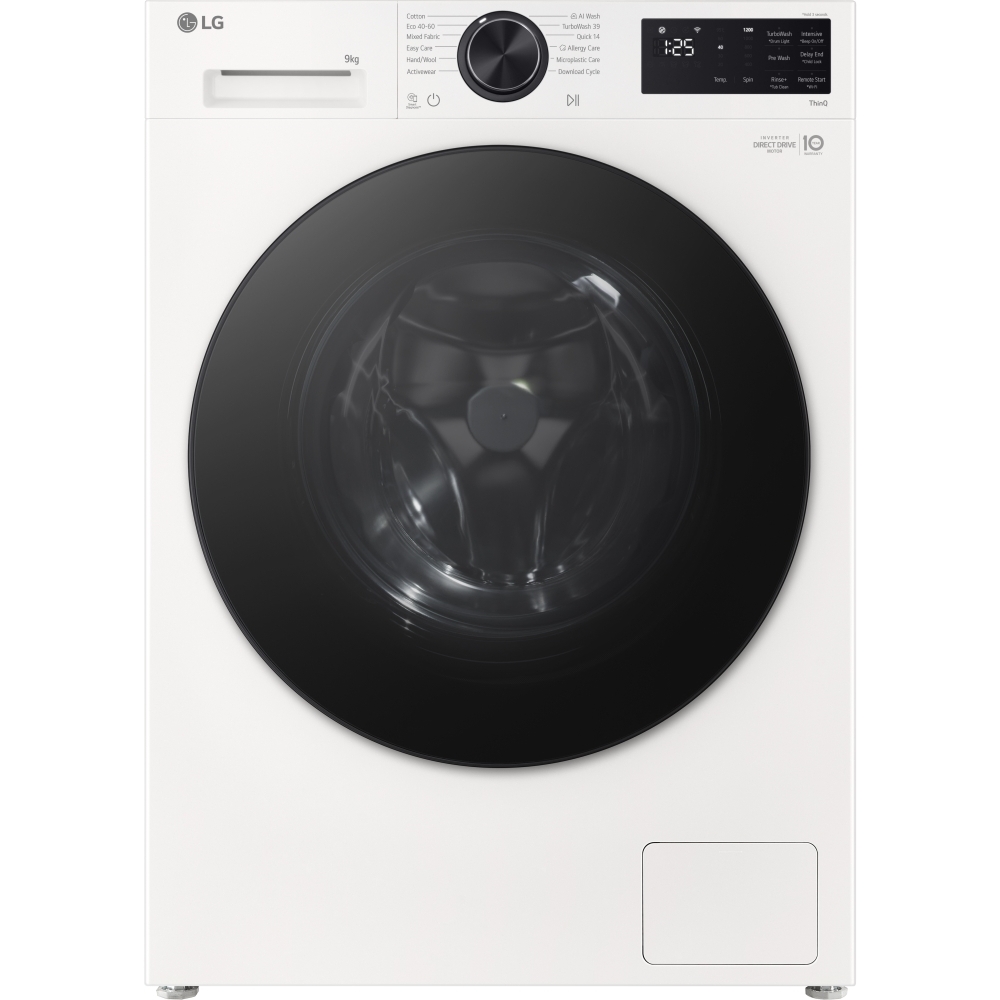
LG F2X50S9TWB Series 3 Counter-Depth MAX™
9kg · 1200rpm · A rated · White
The most reliable machine on this page by some distance at 91, and still 32 kWh. The 1200rpm spin is the compromise — washing comes out wetter.
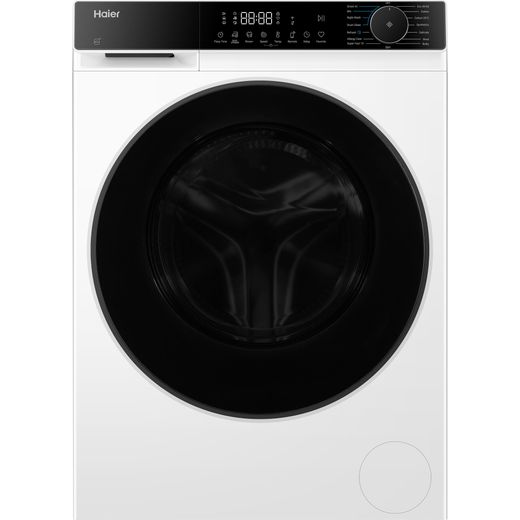
Haier X5 Plus HW90BP14357AETUK
9kg · 1400rpm · A rated · White
A 9kg Haier at 32 kWh and £349. Nothing outstanding, nothing weak: the middle option if the two above are out of stock.
The bottom line
Here is the whole guide in one line: the Hoover HGD 49B10C-80 wins the kilowatt-hour column, and the LG F2X50S9TWB wins your money. The gap in running cost between the most and least efficient machine here is a few pounds a year; the gap in what they are like to own is far wider. Buy on the WAC Score and treat efficiency as the tie-breaker it is. And for the best-value machine of all — nearly as efficient at WAC 90 — see the Candy GD 410B9B-80 in our budget guide.
Frequently asked questions
What is the most energy-efficient washing machine under £400?
The Hoover HGD 49B10C-80 is the most efficient under £400 in our data — 30 kWh per 100 cycles, about 7.8p a wash. But the gap to the rest is tiny: every machine on this page runs between 30 and 32 kWh, so we would let overall WAC Score, capacity and price decide rather than chasing the last kWh.
How much does energy efficiency actually save on a washing machine?
Less than most people expect. At the July 2026 Ofgem rate of 26.11p per kWh, the difference between the most and least efficient machine in this guide is only a few kilowatt-hours per 100 cycles — roughly a few pounds a year for a typical household. Over a decade that adds up, but it rarely justifies paying a large premium up front. Buy price and overall quality usually matter more than the last kilowatt-hour.
What does kWh per 100 cycles mean?
It is the energy label's standard measure: the electricity a machine uses across 100 wash cycles on the standard eco 40–60 programme, in kilowatt-hours. Lower is better. To turn it into a running cost, multiply by your electricity rate (26.11p per kWh as of July 2026) and divide by 100 to get the cost per wash. Every figure in this guide is calculated that way.
Is an A-rated machine always cheaper to run?
Not necessarily cheaper than every other A-rated machine — the A grade is a band, and machines within it still vary by a few kWh. It will, however, be meaningfully cheaper to run than an older B- or C-rated machine. Every machine in this guide is A-rated under the current (post-2021) label, so differences here come down to the exact kWh figure, which is what we rank on.
Are these washing machines freestanding?
Yes — every machine in this guide is freestanding, a standalone unit you can plumb in anywhere. We do not include integrated (built-in) machines, which need a fitted kitchen cabinet and a cupboard door and are a separate category.
Not sure which is right for you?
Answer a few questions and we will match you to the best washing machine for your household — across all budgets, all brands.
Find my perfect washing machine